Academic Department
Apparel and Textile Sciences
Constituent Department under College of Community Science
The Department of Apparel and Textile Science, College of Community
Science, Assam Agricultural University, Jorhat, was established in 1973. The
department offers B.Sc, M.Sc. and Ph.D. programmes, providing quality education
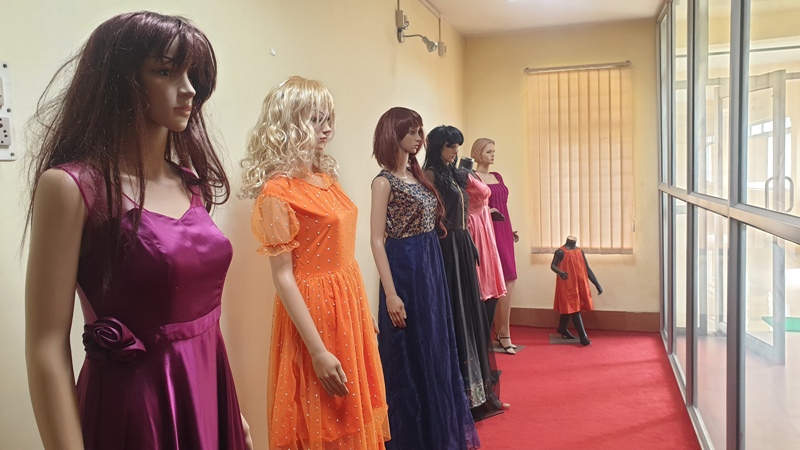
in textile science, apparel design and production, fashion technology,
technical textiles, and sustainable product development. Equipped with modern
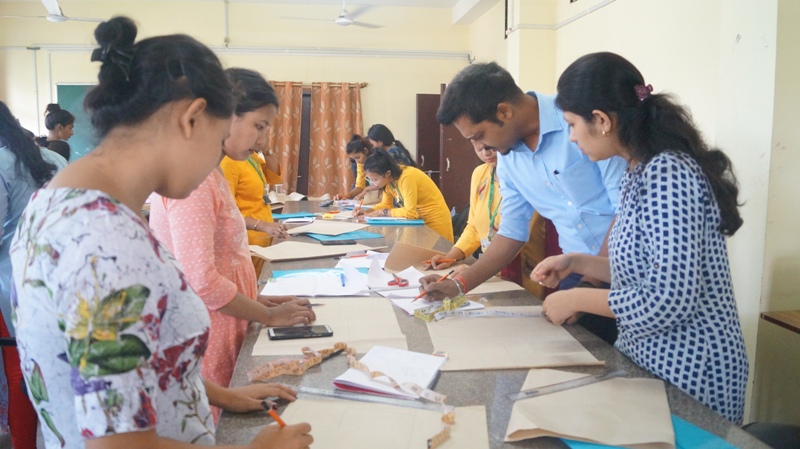
laboratories and advanced textile testing facilities, the department integrates
classroom teaching with experiential learning, internships, entrepreneurship
development, and extension activities to enhance students' practical skills and
professional competence. The department is committed to excellence in teaching,
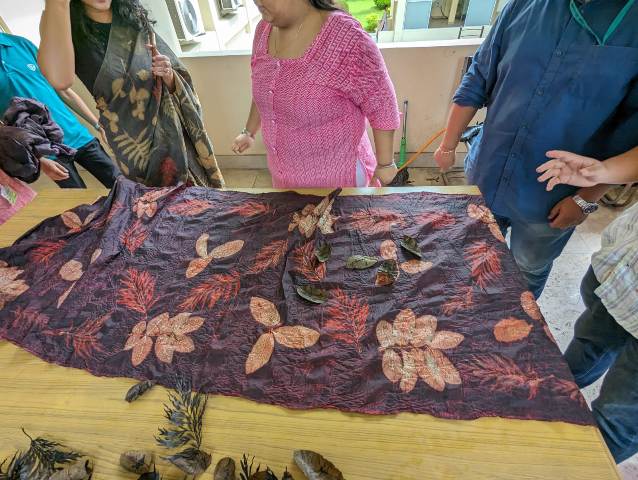
research, innovation, and community outreach. Research activities focus on
contemporary and emerging areas, including technical textiles, sustainable
textiles, natural fibres, silk and sericulture products, nonwoven fabrics,
natural dyes, smart textiles, indigenous textile heritage, apparel design,
textile testing, value addition, and product diversification. The department
also promotes community engagement through skill development programmes,
entrepreneurship training, capacity building of weavers and artisans, promotion
of indigenous textiles, and dissemination of sustainable textile technologies.
These initiatives contribute to rural livelihood enhancement, women
empowerment, preservation of traditional textile heritage, and the development
of competent professionals, researchers, and entrepreneurs capable of meeting
the evolving needs of the textile and apparel sector.
Vision
Our vision is to inspire excellence in apparel and textile science through quality education, cutting-edge research, innovation, and community engagement, while fostering sustainable practices, entrepreneurship, and the preservation of indigenous textile heritage for a better society.
Mission
- To provide quality education, fostering innovative research, and promoting sustainable technologies in apparel and textile science through excellence in teaching, interdisciplinary research, industry collaboration, skill development, and environmentally responsible pratices.
- To nurture creative, skilled, and entrepreneurial professionals through experiential learning, and community engagement while preserving indigenous textile heritage and advancing value-added products for sustainabble livelihoods and economic empowerment of the society.
| # | Course No. | Course Title | Credit | Syllabus |
|---|---|---|---|---|
| 1 | 10(0+10) * | Rural Awareness Work Experience Programme, RAWEP | 0 (0+0) | — |
| 2 | ATS (SEC -III)– 122 * | Indian Embroideries | 2 (0+2) | |
| 3 | ATS (SEC IV)– 122(b) * | Quilting and Patch Work | 2 (0+2) | |
| 4 | ATS (SEC VII)– 221(a * | Fashion Illustration | 1 (0+1) | |
| 5 | ATS (SEC VIII)– 221( * | Portfolio Development | 1 (0+1) | |
| 6 | ATS (SEC-I)-112 * | Textile Dyeing and Printing | 2 (0+2) | |
| 7 | ATS (SEC-II)-112 | Fabric Embellishment | 2 (0+2) | |
| 8 | ATS (SEC-V)-122 * | Garment Designing | 1 (0+1) | |
| 9 | ATS 222 * | Retailing and Merchandising | 2 (1+1) | |
| 10 | ATS(SEC-VI) -211 | Accessory Designing | 1 (0+1) | |
| 11 | ATS-113 * | Textile Science and Fabric Care | 3 (2+1) | |
| 12 | ATS-123 * | Fundamentals of Clothing Construction | 3 (1+2) | |
| 13 | ATS-213 * | Pattern Making and Draping | 3 (1+2) | |
| 14 | ATS-313(a) * | Techniques of Fabric Construction | 3 (1+2) | |
| 15 | ATS-313(b) * | Principles of Textile Designing | 3 (0+3) | |
| 16 | ATS-323 * | Traditional Textiles and Costumes of India | 3 (2+1) | |
| 17 | ATS-412(a) * | CAD- Pattern Making and Grading | 2 (0+2) | — |
| 18 | ATS-412(b) * | Agro Textiles | 2 (1+1) | |
| 19 | ATS-412(c) * | Recent Advances in Textiles | 2 (2+0) | |
| 20 | ATS-413(a) * | Advance Draping Technique | 3 (0+3) | |
| 21 | ATS-413(b) * | Quality Analysis in Textiles and Apparels | 3 (2+1) | |
| 22 | ATS-413(c) * | Apparel Production Management | 3 (3+0) |
* indicates compulsory courses.
| # | Course No. | Course Title | Credit | Syllabus |
|---|---|---|---|---|
| 1 | ATS 501 * | Textile Chemistry | 3 (2+1) | |
| 2 | ATS-502 * | Textile and Apparel Quality Analysis | 3 (2+1) | |
| 3 | ATS-503 * | Pattern Making and Draping | 3 (1+2) | — |
| 4 | ATS-504 * | Woven Textile Design | 3 (2+1) | |
| 5 | ATS-505 * | Wet Processing of Textiles | 3 (2+1) | |
| 6 | ATS-509 * | Textiles Auxiliaries | 3 (2+1) | |
| 7 | ATS-511 | Sustainability in Textile and Apparel Industry | 2 (2+0) |
* indicates compulsory courses.
| # | Course No. | Course Title | Credit | Syllabus |
|---|---|---|---|---|
| 1 | ATS-601 * | Textile Ecology | 2 (2+0) | |
| 2 | ATS-602 * | Technical Textiles | 3 (2+1) | |
| 3 | ATS-605 * | Functional Clothing | 3 (2+1) | |
| 4 | ATS-606 * | Textile Conservation | 2 (1+1) | — |
| 5 | ATS-608 * | Technology of Nonwovens | 2 (2+0) |
* indicates compulsory courses.
.jpg)



Department Achievements & Accolades
7 Records
The Department of Apparel and Textile Science, College of Community Science, Assam Agricultural University, promises to boost authenticity in Muga Silk Production. In a groundbreaking development, the Department has successfully developed a state-of-the-art Muga Detection Kit, set to transform the muga silk industry. This innovative kit, equipped with three detection mechanisms, is poised to revolutionize the authentication process of Muga silk,a treasured commodity indigenous to the region. Muga silk, renowned for its exquisite golden sheen and cultural significance, has faced challenges related to quality control and identification. The newly developed Muga Detection Kit addresses these concerns by offering a comprehensive and reliable solution. The Department plans to commercialize the Muga Detection Kit in the near future, bringing this technological marvel to the hands of silk producers, artisans, and stakeholders involved in Muga silk industry. This move is anticipated to fortify the reputation of Assam Agricultural University as a hub for innovation in agriculture and allied sciences.
National Conclave on "Empowering India's Youth on Sustainable Innovation and Future-Ready Skills in Textiles for Livelihood Resiliency" was held on 12-13th February 2026 Funded by North Eastern Council, Government of India and Co-Sponsor by NEDFi. The event brought together more than 200 participants, including academicians, researchers, scientists, students, entrepreneurs, policymakers, industry experts, and representatives from various institutions across the country. The conclave provided a platform for knowledge exchange, networking, and sharing of innovative ideas and technologies in textiles, promoting sustainable practices, skill development, entrepreneurship, industry–academia collaboration, and livelihood opportunities for youth. It also helped participants gain insights into emerging trends, future-ready skills, value addition, and sustainable textile innovations, contributing to enhanced employability and resilient livelihood opportunities in the textile sector.
International Symposium-cum-Workshop on "Pioneering Sustainable Innovations and Business Opportunities in Natural Fibers" held on 5-6th December 2025 sponsored by Central Silk Board and ICAR (NEH) to promote sustainable innovations, technological advancements, value addition, entrepreneurship, and business opportunities in natural fibres, with a focus on their potential for livelihood development and sustainable industrial growth.
A 15 days Faculty Development & Seri Entrepreneurial Programme on "Sustainable Practices in Sericulture and Surface Enhancement of Silk Fabric" was held on 17–31 January 2025 sponsored by Central Muga Eri Research & Training Institute (CMERTI), Central Silk Board to enhance the knowledge and practical skills of faculty members and participants in sustainable sericulture practices, silk production, surface enhancement techniques, and entrepreneurship opportunities in silk sector.
A landmark achievement marked by the first ever campus placement drive conducted by Bharat Silk, Bangalore through collaborative efforts of Dept of Apparel and Textile Science and the placement cell of College of Community Science, AAU. Following the selection process, five students were successfully recruited at Bharat Silk, Bangalore under National Apprenticeship Training Scheme (NATS), gaining valuable industry exposure and practical training in textile manufacturing, quality management and apparel production.
Patents Published
Patent Filled
1. Innovative Formulation of Dual Functional Agents (Liquid and Microcapsule) Derived from Mature Tea Leaves Extracts for Antimicrobial and UV Protection on Cotton Fabric
2. Novel Antimicrobial and UV Protected Agent (Liquid and Microcapsule Formulation) Derived from Onion Peels Extract for Treatment of Cotton Fabrics
3. A Novel Method for Processing of Lac Dye with Natural Mordant and Its Application on Eri Silk Yarn
Patent Filled
1. Natural Dye from Eri (Samia ricini Boisduval) Silkworm Excreta and the Process of Preparation Thereof
Four Natural dyes Caramel Brown, Yellowish Brown, Chochlate Brown and Light Ash Brown has been commercialized.
Research & Extension Projects
14 Total Projects
Ongoing Projects (9)
Collaborative Project on Sustainable leather alternatives from silk waste and natural rubber composite
The project involved preparation of silk/natural rubber flexible composites, followed by design and development of value-added products using prepared silk-based composites. It also aimed to conduct techno-economic analysis of developed composites and products to assess their cost-effectiveness and market potential. During the project period, first objective was successfully initiated through the preparation and trial of silk/natural rubber flexible composites.
Utilization of Hibiscus sabdariffa as funtional fabrics; Effect of physicochemical properties of infused textiles

The project work involves extraction and determination of bioactive constituents, characterization of physicochemical properties, processing and blending of Hibiscus sabdariffa fibres for development of infused textiles, value-chain analysis and environmental impacts. Training on utilization of Hibiscus sabdariffa fibre was conducted to enhance skill development, product diversification, value addition, entrepreneurship and market potential of fibre-based products.
Quantifying Women's Contribution in Agriculture and Allied sectors using Time Motion Study(Sub Project of AICRP-WIA)
Technology intervention for product diversification in handloom weaving to promote capacity building for livelihood security of women artisanss
.png)
Based on baseline survey, 300 women of 8
villages under No. 82 BirinaSayek Gaon Panchayat, Titabar subdivision, Jorhat, Assam were selected for the training programme. Out of 300
trainees 10 trainees will be selected as master trainer as well as for
Entrepreneurship development programme (EDP). Beneficiaries
were identified with the help of SHG leaders, Krishi Sakhi, VO of SHG, Gaon-Pradhan and local association, etc. Skill enhancement training
on improved techniques of handloom weaving was conducted. The training
sessions covered various improved techniques of weaving including Drum warping,
headle making, Jacquard weaving, Draw boy
techniques, design development on punch card, etc. The selected
beneficiaries have been trained in regards to standard measurement, colour combination, size and placement of
design, packaging of the product etc. during their product development training
of woven products namely table runner, cushion covers, placemat set, and area
rug. For marketing of their products initiative has been taken to build
linkages with Rashtriya Gramin Vikash Nidhi (RGVN), Crisil foundation and Ballsy group foundation.
Potential of crop residue in NEH region- A circular economy perspective for sustainable livelihood

The project aims to optimize residue management through systematic data collection, analysis, and refinement of traditional practices to enhance resource-use efficiency. A survey was conducted in Central and Lower Brahmaputra Zone, covering Nagaon, Nalbari, Baksa, Kokrajhar, and Goalpara districts, to assess the availability and utilization of crop residues. It focuses on exploring and innovating fibre biomass from major crops for development of high-quality, value-added products and assessing their economic viability. By establishing efficient value chains, strengthening market linkages, and providing start-up and entrepreneurship training, the project seeks to promote sustainable enterprises, generate livelihood opportunities, and enhance resource efficiency.
Development of skill for setting up small and cottage scale industry based on natural resources of North Eastern region of India
The project involves providing practical training and demonstrations on fibre extraction and development of value-added products, along with creating awareness about the establishment of MSME-scale industries and market potential of developed products and processes. Eight numbers of training programmes were conducted to provide participants with basic information on availability and utilization of natural resources in different states of North Eastern Region for potential industrial development.
Sankari Yugar Brindabanivastaar Kala Samahar
AICRP on Home Science (Textile and Apparel Design)
All India Coordinated Research Project

Completed Projects (5)
Tribal subplan project: Diversification of handloom products for entrepreneurial development
(PI/Co-PI/Associated Scientist : Dr. Nabaneeta Gogoi)
Tribal Sub plan
(PI/Co-PI/Associated Scientist : Dr. Smita Bhuyan)
Development of green composites by utilizing agricultural waste for building, construction, furniture and other applications
(PI/Co-PI/Associated Scientist : Dr. Binita Baishya Kalita)
Value addition of handloom fabric for product diversification and higher marketability
(PI/Co-PI/Associated Scientist : Dr. Nabaneeta Gogoi)
Effect of detergent on physical properties of silk and silk blended yarn
(PI/Co-PI/Associated Scientist : Dr. Ava Rani Phukan)
Department Photo Gallery
3 Photos